Ferrari F80 2026 : Ferrari’s latest halo machine, the 2026 F80, is no longer just a concept or a European‑only showpiece—it has officially landed in the United States as the brand’s most extreme road‑legal hypercar to date.
Priced in the mid‑to‑high‑seven‑figure range and limited to just 799 units worldwide, the F80 is already spoken for by collectors and high‑net‑worth buyers, many of whom are based in the U.S.
For American enthusiasts, the F80 represents the spiritual successor to icons like the F40, Enzo, and LaFerrari, now reimagined with a turbo‑hybrid V6 heart and Formula‑1‑derived technology.
A Flagship Built for the U.S. Collector Market
Although Ferrari does not build the F80 in large volumes, U.S. allocations are among the most sought‑after in the global allocation list.
The car is positioned as a top‑tier collector piece, sitting above the 296 GTB and SF90 Stradale in both price and exclusivity.
Early reports indicate that American buyers are snapping up their allocated slots through Ferrari’s official dealer network, often pairing the F80 with existing SF90s or 812s in their garages.
With a base price hovering around $3.7–3.9 million before options, the F80 is less of a “purchase” and more of an investment, aimed at clients who want a future‑classic that also happens to be one of the fastest cars on the planet.
Design That Channels History, Not Trends
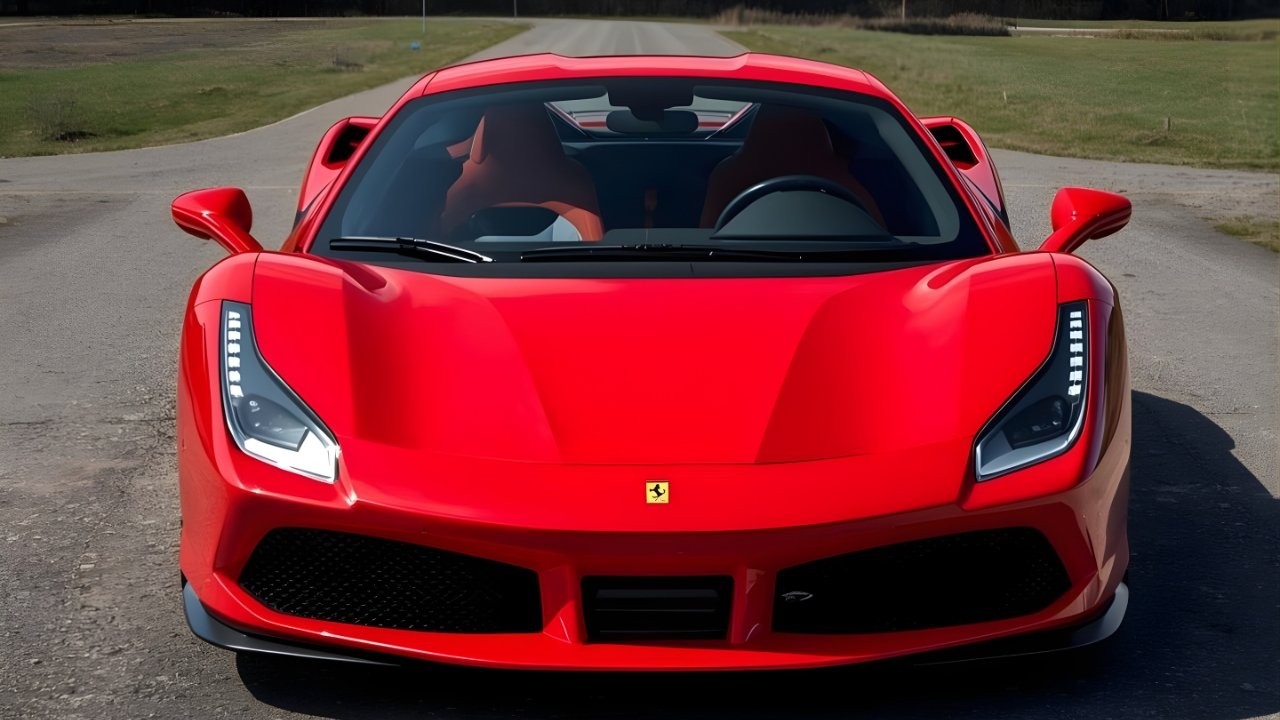
Exterior styling of the 2026 F80 leans heavily on Ferrari’s 1980s and 1990s supercar language, with sharp creases, exposed carbon‑fiber elements, and a mid‑engine silhouette that screams purpose.
The front end is dominated by a wide, low intake and narrow LED headlights, while the rear features a full‑width light bar and an active rear wing that adjusts on the fly for drag or downforce.
The greenhouse is compact, with small side windows and a glass‑covered engine bay that showcases the twin‑turbo V6 and hybrid hardware.
In the U.S., many early‑delivered cars are expected to wear traditional Rosso Corsa or Rosso Supercar, though bespoke Tailor‑Made finishes will inevitably emerge at events like Monterey Car Week and Pebble Beach.
Powertrain: Hybrid V6 with Hypercar Punch
Under the skin, the F80 breaks with Ferrari’s recent V8 and V12‑centric flagships by adopting a 3.0‑liter twin‑turbo 120‑degree V6 paired with three electric motors for a combined output of roughly 1,180–1,200 horsepower.
Two electric motors drive the front wheels, enabling all‑wheel drive and torque vectoring, while a third motor sits between the engine and the eight‑speed dual‑clutch transmission, acting as both a starter and an MGU‑K‑style energy‑recovery unit.
Ferrari claims the car can reach 62 mph in about 2.1 seconds and hit a top speed of 217 mph, figures that put it on par with or ahead of most current hypercars.
In the U.S., this setup also helps the F80 meet stricter emissions standards without sacrificing performance.
Chassis, Handling, and Track‑Ready Dynamics
The F80 rides on a bespoke carbon‑fiber chassis with active suspension and four 48‑volt electric actuators that adjust damper stiffness at each corner in real time.
An active rear wing, underbody aerodynamics, and brake‑cooler ducts work together to manage airflow and cooling, while the car’s weight is kept in the 3,800‑pound ballpark—heavy for a pure‑race machine but light for a hybrid‑powered hypercar.
Early test drives in Europe describe the F80 as surprisingly approachable on public roads, with predictable steering, strong braking, and enough comfort to make long‑distance touring feasible.
For American owners, that means the F80 can be driven to track days at circuits like Laguna Seca, Road Atlanta, or Circuit of the Americas without feeling like a fragile showpiece.
Interior, Tech, and Everyday Usability
Inside, the F80 dials back some of the raw minimalism of the F40 in favor of a more refined cockpit that still feels purpose‑built.
The driver sits low, with a digital instrument cluster, a small central touchscreen, and physical buttons for key functions like drive modes and traction control.
Materials mix Alcantara, leather, and exposed carbon fiber, with minimal sound insulation to keep the mechanical symphony front and center.
Despite its track‑focused nature, the F80 offers modern conveniences such as climate control, a basic infotainment system, and connectivity features, making it more livable on U.S.
highways than older Ferraris of its class. Cargo space is minimal—around 1 cubic foot—but that’s expected for a two‑seat hypercar.
Positioning Against Rivals in the U.S. Market
In the U.S., the F80’s closest rivals are the McLaren W1, Bugatti Chiron Super Sport, and Koenigsegg Jesko, though each car plays a slightly different role.
The McLaren leans more on lightweight engineering and analog‑style engagement, while Bugatti and Koenigsegg chase outright top‑speed records.
The F80, by contrast, positions itself as a track‑capable, collector‑grade machine that still feels usable on the street.
Its limited production run and Ferrari‑only heritage make it especially attractive to American collectors who already own classic Ferraris and want a modern halo piece that can be driven rather than locked in a climate‑controlled garage.
Ferrari F80 2026 : A New Benchmark for American Hypercar Buyers
The 2026 Ferrari F80 arriving in the United States is more than just another expensive Italian supercar—it is a statement about where Ferrari sees its future: hybrid‑powered, F1‑inspired, and uncompromisingly fast.
Also Read This : Ford Maverick 2026 Revealed Smart Features, Premium Design & Smooth Performance
For U.S. buyers, the F80 offers a rare blend of exclusivity, cutting‑edge technology, and emotional design that few competitors can match. While most owners will never push the car to its limits, the fact that they can is part of the appeal.
As the hypercar landscape evolves, the F80 stands out as a defining machine of the mid‑2020s, and for American collectors, it may well become one of the most coveted Ferraris of the decade.